


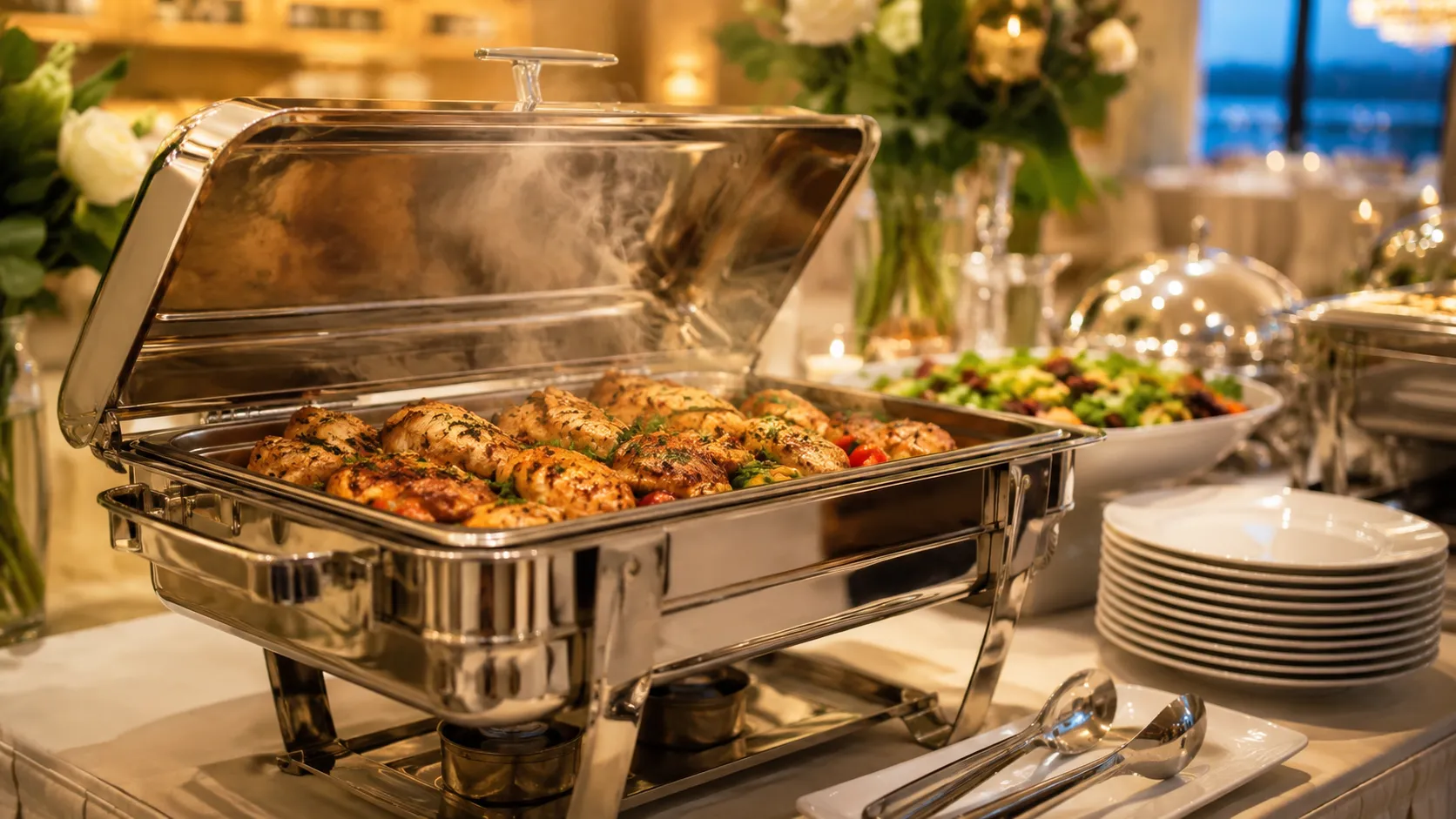
Serving food at a party or catered event sounds simple until dozens of guests arrive at once. Suddenly, keeping dishes warm, maintaining an orderly serving area, and making sure everything still looks appetizing becomes a real challenge. This is where a chafing dish becomes one of the most practical pieces of catering equipment.
Rather than constantly carrying food back to the kitchen for reheating, caterers and hosts can keep prepared dishes warm directly at the serving table. A well-planned buffet serving station also helps guests move through the line more comfortably while reducing pressure on staff.
From weddings and corporate lunches to family celebrations, thoughtful hot food holding can make the difference between a buffet that feels rushed and one that runs smoothly. Understanding how these warmers work can help anyone create a more professional and enjoyable dining experience.
Why Temperature Control Matters at a Buffet
One of the biggest challenges with buffet service is maintaining food quality over an extended period.
A tray of freshly cooked pasta, curry, vegetables, or roasted meat may look perfect when it leaves the kitchen. Leave it sitting uncovered at room temperature, however, and the experience can quickly change. Food cools, sauces thicken, and dishes that were meant to be comforting and warm become far less appealing.
This is why hot food holding is such an important part of buffet planning.
A chafing system provides gentle, consistent heat beneath the food pan. Instead of cooking the food again, the goal is to maintain the temperature of food that has already been prepared.
For guests, the difference is noticeable. The first person through the buffet line and someone arriving half an hour later can enjoy food in much more similar conditions.
For caterers, consistent temperature control also means fewer interruptions and less unnecessary movement between the kitchen and dining area.
How a Chafing Dish Works
A typical chafing dish uses a straightforward setup consisting of a frame, water pan, food pan, lid, and heat source.
The water pan sits below the food container. Heat warms the water, which then transfers gentle heat to the food pan above it. This indirect heating method helps reduce the risk of food scorching compared with placing a container directly over a flame.
Depending on the model and venue, the heat source may be fuel-based or electric.
The basic process is simple:
- Prepare and cook the food properly before service.
- Add hot water to the water pan.
- Place the prepared food in the upper pan.
- Apply the appropriate heat source.
- Monitor both food temperature and water level during service.
- Keep the lid closed whenever practical.
Although the equipment is simple, careful setup makes buffet service much easier.
Building a More Efficient Buffet Serving Station
A good buffet serving station is not simply a row of food trays. The arrangement should help guests understand where to begin, where to move next, and how to serve themselves without creating unnecessary congestion.
Warm dishes are often positioned together, allowing staff to monitor them efficiently.
Plates can be placed at the beginning of the line, followed by main dishes, side dishes, sauces, and other items. Cutlery and napkins can usually be positioned toward the end so guests do not have to carry them while serving food.
When organizing an event catering setup, consider:
- The expected number of guests
- Available table space
- Number of hot dishes
- Serving utensil requirements
- Access for catering staff
- Guest traffic direction
- Distance from the kitchen or preparation area
Small planning decisions can dramatically improve the flow of service.
Why Catering Buffet Equipment Improves Service Efficiency
Professional catering buffet equipment does more than keep meals presentable. It can simplify the entire serving process.
Imagine a birthday celebration with 80 guests. Without warming equipment, staff may need to bring smaller trays from the kitchen repeatedly. Every replacement takes time, and the serving table may temporarily run out of a popular dish.
Using larger heated serving containers allows staff to focus more on replenishing food, helping guests, clearing tables, and monitoring the overall event.
This is particularly useful for:
Weddings
Wedding meals often involve many guests eating within the same period. Reliable food warming helps maintain consistency throughout service.
Corporate Events
Business lunches and conferences usually operate on strict schedules. Organized catering buffet equipment helps guests serve themselves quickly during limited breaks.
Family Celebrations
Birthdays, anniversaries, reunions, and holiday gatherings can involve more people than a home kitchen can comfortably serve at once. Buffet warming equipment makes large-scale serving easier.
Community Events
Fundraisers, school events, and community dinners often require efficient service without a large catering staff. A simple buffet arrangement can make food distribution much more manageable.
Choosing a Food Warmer for Parties
The right food warmer for parties depends on the menu, guest count, available space, and style of the event.
A small gathering may only require one or two warming dishes. A wedding or large corporate function might need an entire row.
Capacity is particularly important. Large pans can accommodate substantial quantities of food but may take up too much room on compact tables. Smaller warmers offer flexibility and can be useful when serving several different dishes.
Also think about the shape of the food pan.
Rectangular designs work well for many main dishes and side dishes. Round styles can suit soups, stews, curries, sauces, or menus where presentation is especially important.
Hosts planning multiple events may benefit from choosing flexible equipment that works with different menus rather than equipment suited to only one occasion.
For example, browsing different styles of catering chafing dishes can help clarify the differences in size, shape, lid design, and serving configuration before planning a buffet.
Benefits of a Stainless Steel Food Warmer
A stainless steel food warmer is common in catering environments for several practical reasons.
First, stainless steel has a clean, professional appearance that works with many event themes. Whether the buffet is set up for a formal wedding or a casual corporate lunch, the equipment generally blends into the presentation rather than distracting from it.
It is also relatively easy to clean and maintain when cared for correctly.
Another advantage is durability. Catering equipment is frequently transported, assembled, cleaned, packed, and used again. Materials designed for repeated use are therefore valuable for caterers, event venues, and anyone who regularly hosts large gatherings.
A stainless steel food warmer can also coordinate easily with serving utensils, trays, beverage dispensers, and other buffet accessories.
Hot Food Holding Is About More Than Heat
Effective hot food holding involves more than simply turning on a burner.
Food should already be properly cooked and heated before it reaches the buffet. A warmer is intended primarily to maintain serving temperature rather than to cook cold food.
Staff should also monitor the buffet throughout the event.
For example, if a pan is nearly empty, transferring the remaining food into a smaller container may sometimes create a better presentation than leaving a thin layer spread across a large pan.
Lids should be used whenever appropriate because they help retain heat and moisture. However, condensation should also be managed carefully so excess water does not affect the appearance of certain foods.
Local food-safety requirements should always be followed, particularly for commercial catering.
Making an Event Catering Setup Look More Professional
Guests notice presentation, even when they cannot explain exactly why a buffet looks polished.
A coordinated event catering setup creates visual consistency.
Try to keep similar warmers aligned evenly rather than positioning containers at random angles. Leave enough space between dishes for serving utensils and make sure guests can clearly see what is available.
Simple food labels can also help, particularly when dishes contain common allergens or are suitable for specific dietary preferences.
Table coverings, risers, serving trays, and decorations can add visual interest, but they should never interfere with safe access to heating equipment.
Good presentation is usually about balance. The food should remain the focus.
Common Buffet Mistakes to Avoid
Even quality equipment cannot compensate for poor buffet planning.
One common mistake is overcrowding the table. When too many dishes are squeezed into a small space, guests struggle to serve themselves and spills become more likely.
Another problem is preparing the warming equipment too late. Your food warmer for parties should be ready before hot dishes arrive at the serving area.
Other mistakes include:
- Letting water pans run dry
- Leaving lids open unnecessarily
- Using incorrect serving utensils
- Failing to monitor food levels
- Creating long queues with a poorly organized layout
- Mixing hot and cold serving areas without a clear plan
- Neglecting food-safety temperature checks
A little preparation can prevent most of these problems.
Frequently Asked Questions
What is a chafing dish used for?
A chafing dish is designed to keep already-cooked food warm during buffet-style service. It is commonly used at weddings, parties, corporate events, restaurants, and catered functions.
Can a chafing dish cook food?
It is generally intended for maintaining the temperature of prepared food rather than cooking raw or cold ingredients. Food should normally be cooked and properly heated before being transferred to the warmer.
How many warming dishes do I need for a buffet?
The number depends on your guest count and menu. If you are serving several hot main dishes and sides, each item may require its own container. Planning the complete buffet sbenefitserving station before the event makes estimating equipment needs easier.
Is stainless steel suitable for catering equipment?
Yes. A stainless steel food warmer is widely used because it provides a professional appearance, is relatively easy to maintain, and can withstand repeated use when handled correctly.
What should be included in catering buffet equipment?
The exact equipment varies by event, but catering buffet equipment may include warming dishes, serving pans, utensils, tables, beverage dispensers, food labels, trays, and equipment for maintaining safe food temperatures.
Conclusion
Successful buffet service is rarely about one piece of equipment. It comes from combining good food, thoughtful preparation, proper temperature management, and an organized serving area. Still, a reliable chafing dish can make each of those responsibilities easier.
By creating consistent warmth and reducing the need for repeated reheating, warming equipment helps both guests and catering staff enjoy a smoother experience. The right event catering setup also improves traffic flow, presentation, and access to each dish.
Whether you are arranging a small celebration or coordinating a large catered function, plan your food warmer for parties, serving layout, and hot food holding requirements before guests arrive. When those details are handled properly, the buffet feels less like a collection of food trays and more like a well-organized dining experience.
